
Planning a new build on Brisbane’s southside means getting the land right before anything else happens. Whether you’re clearing a suburban block in Sunnybank, preparing acreage in Calamvale, or getting a development site ready in Eight Mile Plains, proper land clearing sets the foundation for everything that follows.
Many property owners underestimate what’s involved in preparing land for construction. It’s not just about removing trees and levelling dirt. Professional land clearing ensures your site meets council requirements, prevents future drainage issues, and creates a safe, stable base for your new build. Treesafe provides comprehensive land clearing services across Brisbane’s southside, combining qualified arborist expertise with modern equipment to prepare your property correctly from the start.
Why Professional Land Clearing Matters for New Builds
Land clearing for new builds involves far more than removing vegetation. A properly cleared site needs to meet Brisbane City Council regulations, provide stable ground for foundations, support correct drainage and water flow, and ensure safe access for builders and machinery.
Leaving stumps, roots or uneven ground behind creates problems later such as slab movement, cracking, or poor stormwater flow. Mature roots left in the ground can decompose and create voids, while incorrect grading may cause water to pool around your new home.
Professional operators understand soil conditions across Brisbane Southside, from the clay pockets in Eight Mile Plains to the sandy soils around Rochedale, and clear the block accordingly.
Council Requirements You Must Know
Brisbane City Council has strict rules on vegetation removal and site preparation. Before clearing begins, you may need approval to remove protected trees or vegetation, erosion and sediment control measures, and defined access routes for heavy equipment.
Clearing protected vegetation without approval can lead to fines and delays. Council may require certain trees to stay or mandate that erosion controls such as silt fencing or mulch coverage are in place during works.
Treesafe identifies vegetation overlays, arranges any required permits and ensures your clearing meets local laws so your project moves forward without compliance issues.
What Land Clearing for New Builds Involves
A typical land clearing project includes several key steps.
1
Site assessment
We inspect all vegetation, stumps, access points, slopes and potential hazards such as underground services. This determines how the block should be cleared and what equipment is needed.
2
Tree removal
Qualified arborists safely remove trees, especially those near boundaries, structures or services. This may involve sectional dismantling or crane removal for large trees.
3
Stump grinding or removal
Stumps and large roots are ground out or fully removed to prevent subsidence or interference with slabs, plumbing or landscaping.
4
Vegetation and waste management
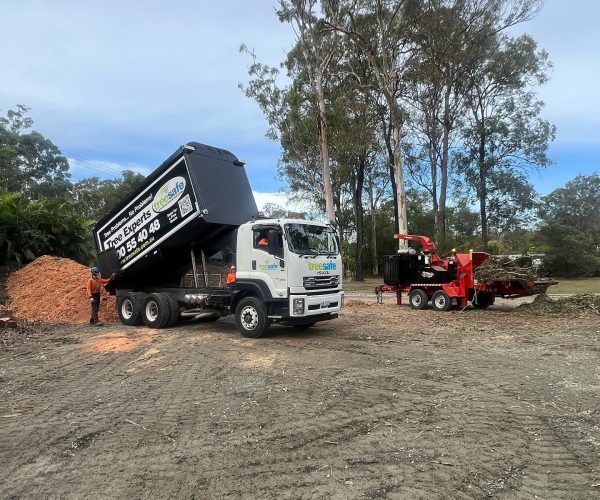
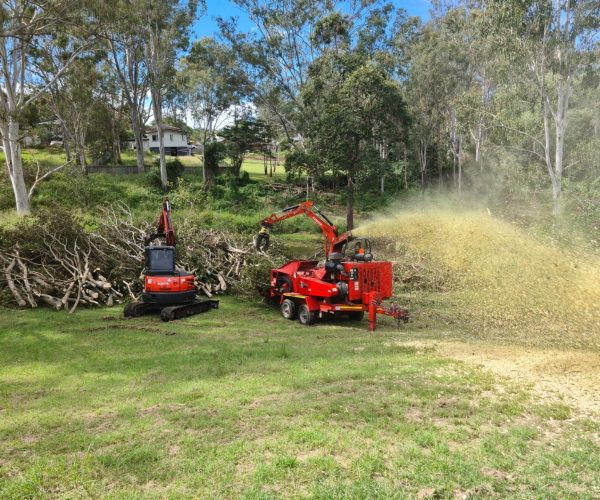
Undergrowth, shrubs and waste material are mulched on-site or taken to a licensed green waste facility. On-site mulching can help reduce erosion before construction begins.
5
Initial site grading
The block is shaped to support proper water runoff and to give builders safe, stable working conditions. Initial grading prevents waterlogging and uneven settling before earthworks begin.
Timing Your Land Clearing
Scheduling clearing at the right stage helps avoid delays and additional costs.
- Before development approval is usually too early, as council may require specific vegetation to remain
- After plans are approved is the ideal time to schedule clearing
- Clearing before the wet season avoids machinery access issues and waterlogged sites
- Coordinating with your builder ensures the block is ready exactly when construction is due to start
Most land clearing on Brisbane’s southside takes between one and five days, depending on block size, vegetation density and access.
Managing Vegetation and Waste
Land clearing produces significant green waste that needs professional handling.
- On-site mulching covers exposed soil and reduces erosion
- Waste removal ensures all debris is taken to licensed facilities for proper processing
- Salvaging usable timber may be possible depending on tree species
Treesafe assesses each project to determine the most efficient and compliant waste management method for your site.
Preparing for Services and Construction
Good land clearing considers what comes next in the build process.
Construction requires clear access routes, stable ground, accurate boundary identification and protection of underground services such as sewer, stormwater, electricity and telecommunications. Clearing should prepare these areas without creating unnecessary level changes that complicate future earthworks.

Safety Is Essential
Land clearing involves risks including large trees, heavy machinery, uneven ground and unmarked services. Professional operators manage:
- Controlled tree felling
- Machinery operation and work zones
- Public safety when working near roads or boundaries
- Underground hazards and unstable soil
- Erosion, drainage and environmental controls
Treesafe uses trained arborists, licensed operators and full insurance to protect your site and the surrounding area.
Choosing the Right Land Clearing Provider
Effective land clearing requires qualified arborists, modern machinery, full insurance, local experience and clear communication. Selecting a provider who manages everything from permits to final site preparation ensures your block is genuinely ready for construction.
Treesafe specialises in end-to-end clearing across Brisbane’s southside, combining arborist expertise with accurate, compliant site preparation.
Get Your New Build Started the Right Way
Proper land clearing prevents costly issues, avoids delays and gives your construction project the best possible start. Treesafe provides reliable, council-compliant clearing tailored to your site and building plans.