
When a tree is removed, many property owners assume the job is finished. The trunk is gone, the branches have been cleared, and the site looks ready to build on. But beneath the surface, the stump and root system remain.
If you are planning a slab, driveway or retaining wall, stump grinding may be an important part of preparing the area for construction. Dealing with the stump before building begins also avoids it becoming an obstruction during excavation or other site works.
What Happens When Stumps and Roots Are Left in Place
Tree roots do not simply disappear when a tree is cut down. They remain in the soil and gradually decay.
This can affect how an area is prepared for future construction, particularly where a stump or large roots sit directly within the proposed building area.
Ground conditions also vary from site to site. Where construction is planned over or close to a former tree location, the builder, engineer or other relevant professional can determine what ground preparation is required.
Addressing the stump before construction begins makes it easier for this work to be completed properly.
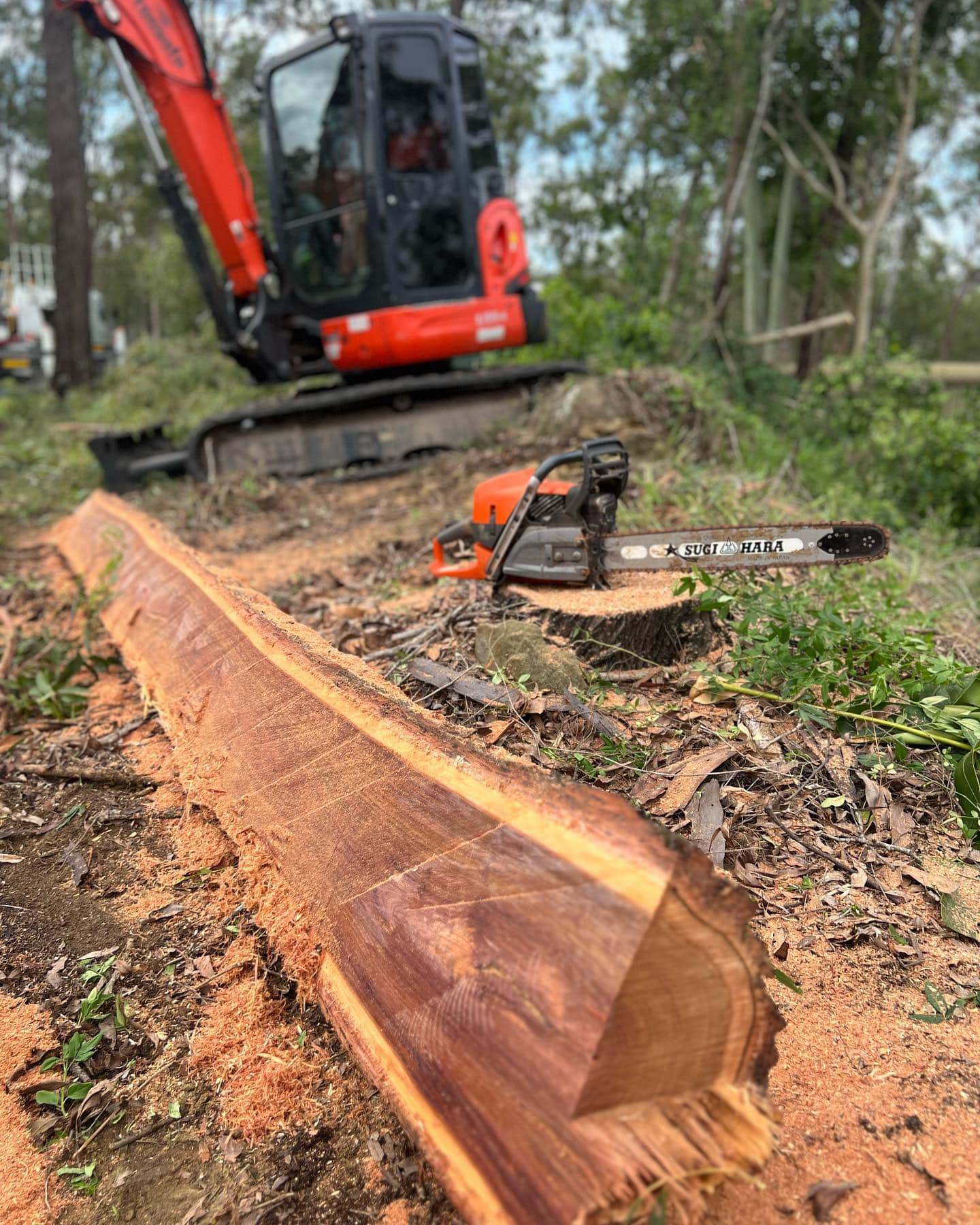
Why Cutting a Stump Flush Is Not Enough
Some property owners have the stump cut at ground level and cover it with soil. While this may improve the appearance of the area, the stump and root system remain below ground.
For general landscaping, that may be suitable in some situations. Where construction is planned in the same area, however, the stump may need to be ground below the surface or removed more extensively.
Stump grinding mechanically reduces the stump below ground level, helping clear the area for excavation and site preparation. How deep it needs to be ground will depend on what is being built and the requirements for the site.
Slab Preparation
Concrete slabs require the ground beneath them to be prepared for the proposed construction.
Where a stump or large roots remain within the slab area, they can interfere with excavation and preparation of the ground. Removing them before this work begins allows the builder or contractor to prepare the area as required.
The extent of stump and root removal should be confirmed as part of the project’s site preparation rather than assuming standard stump grinding will always be sufficient.
Driveways and Paved Areas
Stumps and large roots can also interfere with the preparation of driveways and paved areas.
Where they sit within the proposed driveway, removing them before base preparation begins gives the builder or contractor clear access to prepare the area for concrete or paving.
Planning this work early also avoids discovering a stump or large root system once excavation is already underway.
Retaining Walls and Structural Landscaping
Stumps and roots within the footprint of a proposed retaining wall can interfere with excavation and preparation for the wall.
If a tree has recently been removed from the area, it is worth identifying the location of the remaining stump and major roots before construction begins.
Depending on the wall design and site conditions, stump grinding or more extensive removal may be required. The builder, engineer or retaining wall contractor can advise what needs to be cleared for the proposed works.
Multi-Stump Projects on Larger Sites
For builders and developers, site preparation may involve removing multiple stumps before construction begins.
Completing this work together can improve machinery access, reduce interruptions later in the project and make it easier to coordinate stump removal with excavation and other site works.
Where several trees are being removed from a development site, planning stump removal at the same time can make the overall clearing process more efficient.
Regrowth and Ongoing Maintenance
Some tree species can produce new growth from remaining stump or root material after the tree has been cut down.
This can create ongoing maintenance problems, particularly where the area is being prepared for new landscaping, paving or other works.
Grinding or removing the stump can help clear the area and reduce the likelihood of the old stump interfering with its future use.

When More Extensive Stump Removal Is Needed
Stump grinding will not be suitable for every construction project.
Where a stump is within an excavation area, service trench or structural footprint, more extensive removal may be required. The appropriate method will depend on the stump’s location and the requirements of the proposed construction.
An experienced stump removal operator can complete the work to the required area and depth once these requirements have been established by the builder, engineer or other relevant project professional.
Preparing the Area for Construction
The way a stump is removed should take into account how the area will be used afterwards.
Grinding depth, access and nearby structures or underground services can all affect how the work is carried out. Letting the stump grinding contractor know what is planned for the area helps them understand the required scope of work.
For construction projects, coordinating stump grinding with the builder or other contractors can also help avoid unnecessary repeat work.
Organise Stump Grinding Before Building
If you are planning a slab, driveway or retaining wall where a tree has been removed, it is worth dealing with the remaining stump before excavation and base preparation begin.
Treesafe provides professional stump grinding across Brisbane Southside and Gold Coast suburbs for residential and commercial projects. We work with builders, landscapers and property owners to clear stumps before the next stage of work begins.