
Not every tree problem can be managed through pruning. While tree pruning can help manage many trees, there are situations where removal may be the more appropriate option.
The decision depends on factors such as the tree’s health, structure, location and the risks it presents. Understanding the difference can help you determine when pruning may be enough and when a tree should be professionally assessed for removal.
Signs a Tree May Need Removal
Some issues go beyond what pruning can reasonably manage. These are usually related to the tree’s structure, health or stability.
Structural damage can be an important factor. Trees with major trunk splits, extensive decay or large cavities may have a reduced ability to support themselves. Pruning may sometimes reduce the load on affected parts of the tree, but it cannot always address the underlying structural problem.
A dead or severely declining tree may also need to be removed. Signs such as extensive canopy dieback, brittle branches or very little new growth can indicate that the tree needs closer assessment.
Disease and decay can also influence whether a tree can be retained. Root decay, fungal activity or other problems affecting important parts of the tree need to be considered alongside its overall health and structure.
Root problems can be less obvious. Damage to major roots, movement around the base of the tree or other signs of reduced stability may require professional assessment. Where roots are suspected of affecting buildings or underground services, the cause should be properly investigated before deciding whether removal is necessary.
Location and Safety Considerations
Even a healthy tree can become difficult to manage if it has outgrown its location.
Trees growing close to buildings may create ongoing maintenance issues. Branches can overhang roofs, drop debris into gutters or require regular pruning for clearance. In some cases, the mature size of the tree may make it unsuitable for the available space.
Leaning trees also need careful assessment. Some trees naturally grow at an angle, but a new or increasing lean, particularly when accompanied by movement or cracking in the ground around the base, can be a reason to have the tree assessed.
Storm damage is another factor. Trees that have lost major limbs or suffered damage to their trunk or canopy may need assessment to determine whether they can be safely retained or whether removal is appropriate.
When Pruning Is the Better Option
Not all issues require removal. In many cases, pruning is the more appropriate and cost-effective solution.
Trees with localised problems, such as dead branches or minor defects, can often be managed through targeted pruning. This improves safety while allowing the tree to continue growing.
Pruning is also effective for managing clearance. Keeping branches away from buildings, improving light access, and maintaining shape are all common reasons to retain a tree rather than remove it.
For younger trees, corrective pruning can help establish strong structure early. This reduces the likelihood of future problems and avoids the need for more significant work later on.
Getting a Professional Assessment
Deciding between pruning and removal is not always straightforward. A professional assessment can help determine what work, if any, is required.
An arborist will consider factors including:
- Structural condition of the trunk and branches
- Signs of disease or decay
- Root condition and stability
- Location and surrounding structures
- How the tree is likely to develop over time
The tree’s surroundings are also important. A defect in a tree growing away from buildings and frequently used areas may present a different level of risk from the same defect in a tree beside a house, driveway or walkway.
Considering Long-Term Costs
It’s not always just about whether a tree can be saved. In some cases, keeping a tree leads to ongoing costs that outweigh the benefit.
Trees that require frequent heavy pruning, continue to cause damage, or create recurring maintenance issues can become expensive to manage over time. In these situations, removal may be the more practical option.
On the other hand, removing a healthy tree unnecessarily can reduce shade, privacy, and overall property appeal. The right decision balances safety, cost, and the value the tree provides.
What Tree Removal Involves
When removal is required, the process is planned to suit the tree and site.
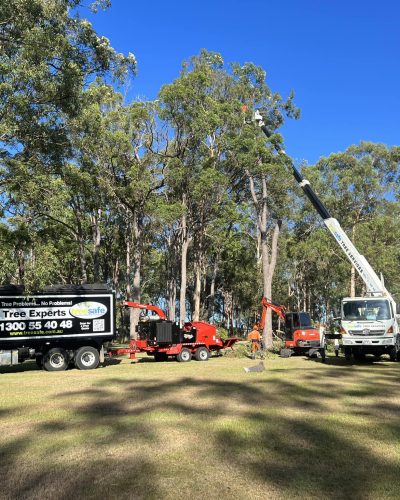
This may involve dismantling the tree in sections, using specialised equipment or crane-assisted removal in tight or difficult locations. The method depends on the size and condition of the tree, available access and surrounding structures.
Stump grinding can also be completed after removal where the stump needs to be cleared for landscaping or other future use.
In some cases, council approval may be required before removal can proceed. Checking any applicable requirements before work begins can help avoid delays.
Deciding Whether to Prune or Remove a Tree
The choice between pruning and tree removal depends on the tree’s condition, location and the risks or problems identified.
Many healthy trees can be retained with appropriate pruning and ongoing maintenance. Where there are significant structural, health or location issues, removal may be recommended after the tree has been assessed.
Treesafe provides tree reports and inspections and tree services across Brisbane Southside and Gold Coast suburbs, helping property owners determine an appropriate way to manage their trees.