
Removing a large tree close to powerlines, fences or buildings can be considerably more complex than removing a tree in an open area. Across Brisbane Southside, mature trees are often located close to homes, property boundaries and overhead powerlines, leaving limited room to carry out the work.
In these situations, professional tree removal requires careful planning and controlled dismantling rather than simply felling the tree in one piece. The tree’s size and condition, available access and surrounding structures all influence how the removal is approached.
Specialist equipment such as rigging systems, elevated work platforms and cranes can also be used where required to safely manage large sections of the tree.
Why Large Tree Removal Near Structures Is More Complex
Trees growing close to powerlines require particular care. Branches, equipment and other parts of the tree can create serious hazards if they come into contact with powerlines during removal.
Buildings, fences and other structures create different challenges. There may be little or no suitable space for large sections of the tree to fall freely, which means branches and trunk sections may need to be carefully controlled as they are removed.
The condition of the tree also matters. Decay, cracks, previous storm damage or an unstable root system can affect how safely different sections can be cut and dismantled.
Access is another consideration. Nearby buildings, narrow side access, fences and neighbouring properties can all influence the equipment that can be brought onto the site and the removal method used.
Learn more about what will affect the cost of tree removal.

Pre-Removal Assessment and Planning

Site Assessment
Before removal begins, the tree and surrounding site need to be assessed. This includes considering the tree’s size, condition and lean, available access and the location of buildings, fences, powerlines and other services.
On properties with restricted access, this assessment is particularly important because there may be limited space for machinery or for sections of the tree to be lowered.
The information gathered helps determine the removal sequence and what equipment will be needed for the job.
Working Near Powerlines
Where trees are close to powerlines, additional requirements may apply depending on the location of the tree and its proximity to the lines.
Coordination with Energex, the electricity network provider for south-east Queensland, may be required before tree work can proceed. Property owners should not attempt to prune or remove trees where branches, tools or equipment could come into contact with powerlines.
Choosing the Right Equipment
The equipment used depends on the tree, available space and surrounding structures.
Rigging systems can allow branches and trunk sections to be lowered in a controlled way rather than dropped. Elevated work platforms can provide access to parts of a tree where site conditions allow, while crane-assisted removal may be suitable for some particularly large or restricted trees.
Having access to different equipment gives the removal team more options when planning complex work around buildings, fences and other obstacles.
How Large Trees Are Removed in Sections
When there isn’t enough space to safely fell a large tree in one piece, it may need to be dismantled in controlled sections. The method used depends on the tree, available space, surrounding structures and site access.
Controlled Dismantling
Where there is not enough space to safely fell a large tree in one piece, it can be dismantled progressively.
Branches and sections of the trunk are removed in a planned sequence. Rigging can be used where necessary to control sections as they are lowered and keep them away from surrounding buildings, fences and other areas that need to be protected.
The exact sequence depends on the shape and condition of the tree and the available working space.
Crane-Assisted Tree Removal
For some large or difficult trees, crane assistance can provide another option for controlling sections during removal.
Rather than allowing cut sections to fall, a crane can support and move them away from surrounding obstacles before they are lowered into an appropriate area.
Whether crane assistance is suitable depends on factors including access, tree size, surrounding structures and the ability to safely position the equipment.
Rigging Large Branches and Timber
Rigging systems can be particularly useful where branches or trunk sections cannot be safely dropped into the area below.
Ropes, pulleys and other specialist equipment allow sections to be controlled during removal and lowered into designated areas.
This can help manage large trees in confined spaces where homes, fences, landscaping or neighbouring properties restrict the available working area.
Working Safely Around Powerlines
Tree removal near powerlines requires additional planning and safety controls. Before work begins, the location of the lines, the movement of branches during removal and any requirements for working near electrical infrastructure need to be considered. That includes how sections of timber will move as they are cut, not just where they sit beforehand.
The required approach depends on the type of powerline, its voltage and how close the tree and proposed work are to it. Professional arborists experienced in working near powerlines assess these factors first, and crews should have clear procedures for stopping work and keeping people clear if conditions change. If a tree or branch is touching a powerline, keep well clear and contact Energex.
For more on trees near powerlines, including when pruning is enough, see what’s involved in removing large trees near powerlines.
Protecting Fences and Structures
When a large tree is close to fences, buildings or other structures, the removal method needs to account for both the tree itself and everything surrounding it.
Impact Zone Management
Fences, sheds, garages and other structures close to the tree need to be considered when planning the removal.
Where there is sufficient space, sections of the tree can be directed into suitable drop zones. On tighter sites, controlled rigging may be used to lower branches and timber away from fences, buildings and neighbouring properties.
Root and Stump Management
Once the tree has been removed, the stump may also need to be dealt with depending on how the area will be used.
Stump grinding can remove the remaining stump below ground level, making it easier to reinstate fencing, landscaping or paving. Where roots are affecting nearby structures, further assessment may be needed before deciding how they should be managed.
Access Restoration
Large tree removal may sometimes require temporary removal of fence panels or other changes to provide suitable equipment access.
These access requirements should be identified before work begins so the property owner understands what is needed and how the area will be left once the removal is complete.
Cleanup After Large Tree Removal
Large tree removal can generate a considerable amount of timber, branches and other green waste.
How this material is handled can depend on the site and agreed scope of work. Vegetation may be chipped or processed on site, while larger timber and other debris can be removed where included in the job.
If you have particular requirements for mulch or timber, these can be discussed when the work is being quoted.
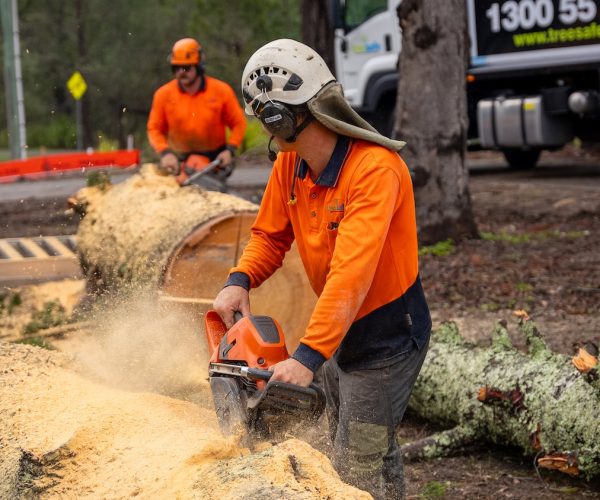
Why Experience and Equipment Matter
Large tree removal around buildings, fences and powerlines requires careful planning and the ability to adapt the removal method to the site.
Access to specialist equipment such as rigging systems, elevated work platforms and cranes provides more options for controlling large sections of a tree where there is limited space.
For complex removals, choosing an appropriately qualified and insured tree contractor with experience working around structures and restricted sites is particularly important. Treesafe’s AQF Level 3 qualified arborists are backed by $20 million in public liability insurance.
Planning a Large Tree Removal?
Large trees growing close to homes, fences and powerlines can require a carefully planned removal rather than conventional tree felling.
Treesafe provides professional tree removal across Brisbane Southside, with the equipment and experience to manage large and complex trees in restricted locations.
Contact Treesafe to discuss the safest approach for your tree and property.