
Large trees in strata complexes and commercial properties can present ongoing management challenges. From maintaining safe shared areas to planning ongoing maintenance, property managers and body corporate committees need to make informed decisions about tree care.
Regular assessment and appropriate maintenance can help identify potential problems early, protect surrounding property, and make it easier to plan future tree works.
Treesafe provides commercial tree services for strata and commercial properties, supporting property managers and body corporate committees with professional tree assessment, maintenance, and removal.
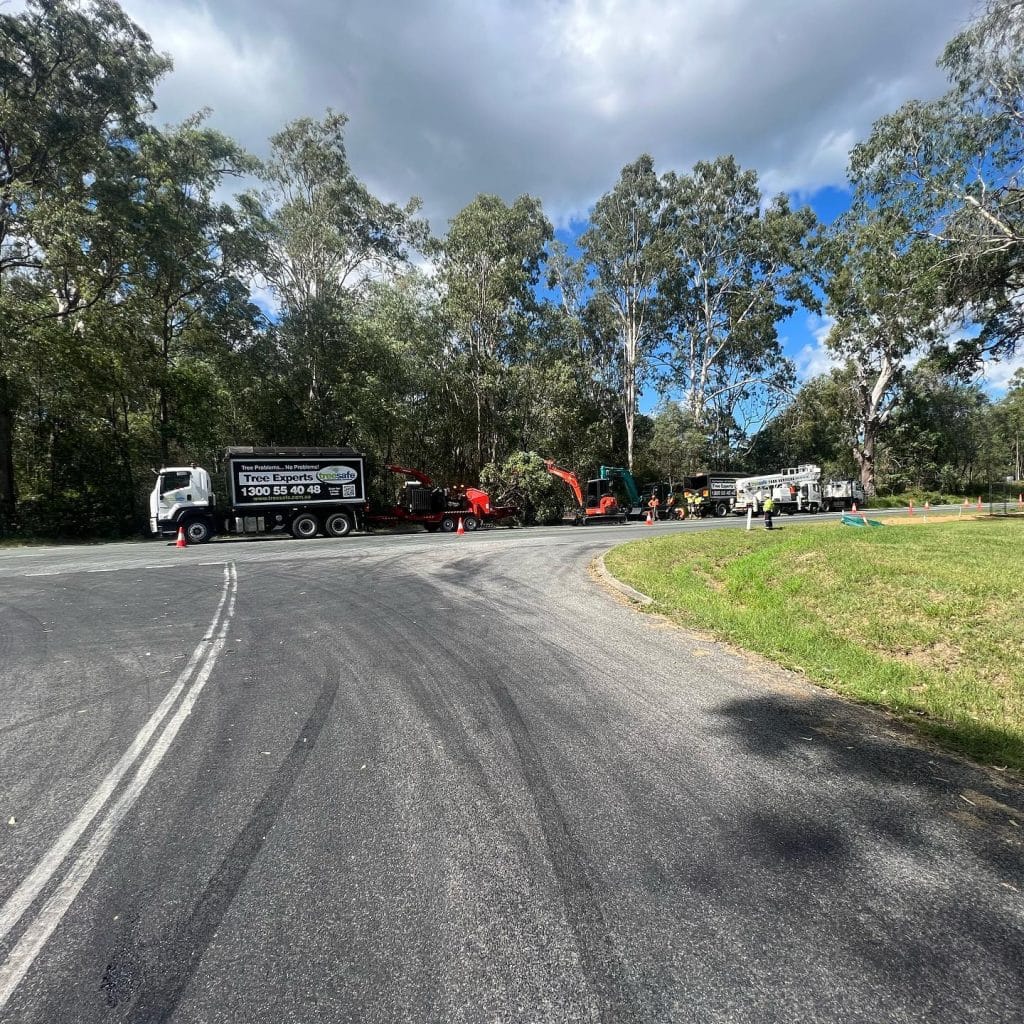
Understanding Your Legal Obligations
Managing trees on common or commercial property can involve a range of responsibilities, depending on the property, location, and circumstances.
Regular inspections can help identify issues such as:
- Dead or overhanging branches
- Structural weaknesses
- Signs of disease or decay
- Root-related risks to infrastructure
In strata settings, tree-related concerns can also arise where branches or roots affect neighbouring properties or shared areas. Professional arborist reports can provide an independent assessment of the tree and recommendations for appropriate action, helping committees make informed and documented decisions.
For a closer look at who is responsible for what, see who is responsible for tree removal in Queensland strata properties.
Common Issues with Large Trees in Commercial Properties
Storm Damage and Risk Exposure
South East Queensland’s storm season can expose weaknesses in large trees. Strong winds and heavy rain can result in branch failure or other damage, particularly where a tree already has structural defects.
Some problems aren’t readily visible from the ground. Decay, damaged branches or changes to the tree’s root environment may require professional assessment to identify.
Following significant storm damage, an arborist can assess affected trees and recommend whether pruning, monitoring or other action is required.
Root Damage to Infrastructure
Tree roots can create issues around commercial and strata properties, particularly where large trees are growing close to paving, underground services and other infrastructure.
Potential issues can include:
- Roots entering damaged or leaking underground pipes
- Lifting or movement of pathways and paved areas
- Potential issues around building foundations and retaining walls
In multi-unit developments, these problems can affect shared areas or infrastructure, making it important to identify the cause before deciding how the tree should be managed.
Access and Ongoing Maintenance
Overgrown trees can interfere with building access and maintenance. Branches near roofs and structures create ongoing issues, including debris buildup, moisture retention, and pest access.
In shared areas such as car parks and walkways, maintaining clear sightlines and safe access is essential. Without regular pruning, these areas can quickly become safety hazards.

The Role of Tree Reports and Inspections
Professional arborist reports can play an important role in managing large trees in strata and commercial properties.
They can provide a clear assessment of:
- Tree health and structure
- Risk level
- Recommended actions and timeframes
For property managers, these reports can support decision-making and maintenance planning. For strata committees, having independent professional advice can also help when tree works need to be discussed and approved.
Ongoing inspections can provide a useful record of changes in tree condition over time and help identify when further maintenance or assessment is required.
When Tree Removal May Be Required
Not all trees can be managed through pruning or ongoing maintenance. In some circumstances, removal may be recommended.
This can include situations where:
- Structural integrity is significantly compromised
- Disease or decay affects the tree's stability
- Roots are causing ongoing infrastructure damage
- The tree poses a safety risk in high-traffic areas
Trees may also need to be considered for removal as part of redevelopment or site upgrades, subject to any relevant approvals or vegetation requirements.
A professional assessment can help determine whether removal is appropriate or whether the tree can continue to be managed through pruning, monitoring or other measures.
How Commercial Tree Removal Works
Tree removal in strata and commercial environments requires careful planning. Unlike residential jobs, these sites often involve:
- Limited access
- Proximity to buildings and services
- Shared spaces used by residents, tenants, customers or staff
Professional arborists assess the tree and surrounding site before determining an appropriate removal method. Depending on the location, this may involve sectional dismantling, rigging or specialised equipment.
Where required, stump grinding can be completed after removal to clear the remaining stump and make the area easier to maintain or reuse.
Coordination is also important. Work can be planned around site access and operations to minimise disruption where practical.
Land Clearing for Commercial Projects
For development sites, tree management may also extend to land clearing. Depending on the project, this can include:
- Vegetation removal
- Stump grinding
- Debris removal
- Site preparation
Vegetation clearing may be subject to local or state requirements, depending on the site and proposed works. Any relevant approvals and clearing boundaries should be established before work begins.
Treesafe can carry out vegetation clearing within the approved project scope and coordinate the work with the wider development program.
Choosing a Commercial Arborist
Commercial and strata tree work can involve larger trees, restricted access, shared spaces and coordination with other contractors or site operations.
When selecting an arborist, property managers may want to consider:
- Experience with strata and commercial properties
- Appropriate qualifications and insurance
- Ability to provide professional tree reports where required
- Experience working around buildings, infrastructure and occupied sites
- Clear quotes and defined scopes of work
Clear communication is particularly important where work needs to be coordinated with residents, tenants, contractors or other stakeholders.
Managing Trees Across Commercial and Strata Properties
Large trees can be a valuable part of commercial and strata properties when they are appropriately managed. Regular assessment, planned maintenance, and timely professional advice can help identify problems early and keep shared areas safe and well maintained.
Treesafe provides commercial tree services across Brisbane Southside and Gold Coast suburbs, including inspections, arborist reports, tree removal, stump grinding, and land clearing.
Our team works with property managers and body corporate committees to provide practical tree management suited to commercial and shared properties. SWMS and insurance documentation are supplied for strata and commercial sites, and every job is backed by $20 million in public liability insurance.