
Preparing a development site involves more than scheduling machinery and earthworks. Trees and vegetation can create approval delays, safety hazards, access issues and unexpected costs if they are not managed correctly. This is why commercial arborists can play an important role during site preparation.
Qualified arborists can assess trees and vegetation, provide reports where required and carry out tree removal, stump grinding and clearing within the approved scope of works. Involving an arborist early can help identify vegetation issues before they interfere with later stages of the project.
Accurate Site Assessment and Compliance
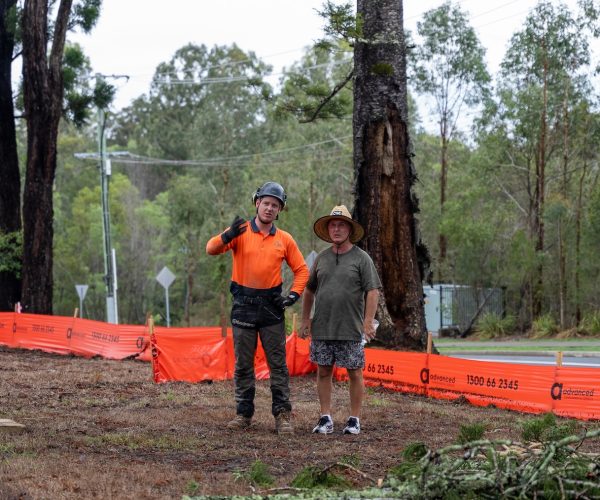
Before earthworks begin, it is important to understand which trees and vegetation may affect the proposed works. An arborist assessment can identify tree condition, trees that may need further consideration, vegetation proposed for retention and root zones that could be affected by construction.
Depending on the development and applicable planning requirements, an arborist report or other tree documentation may also be required as part of the approval process.
Identifying these issues early gives the project team more opportunity to incorporate tree removal, protection or other requirements into site planning before construction begins.
Arborist Reports and Development Documentation
Depending on the site and proposed development, council or the project team may require arborist documentation relating to existing trees.
This can include information about tree health and structure, trees proposed for removal or retention, potential impacts from construction and recommended tree protection measures.
Having the required information available early can help developers respond to tree-related requirements during planning and avoid vegetation becoming an unexpected issue later in the project.
Safe and Efficient Tree Removal and Clearing
Once the required approvals and clearing scope have been established, tree removal and vegetation clearing can be coordinated with the wider construction program.
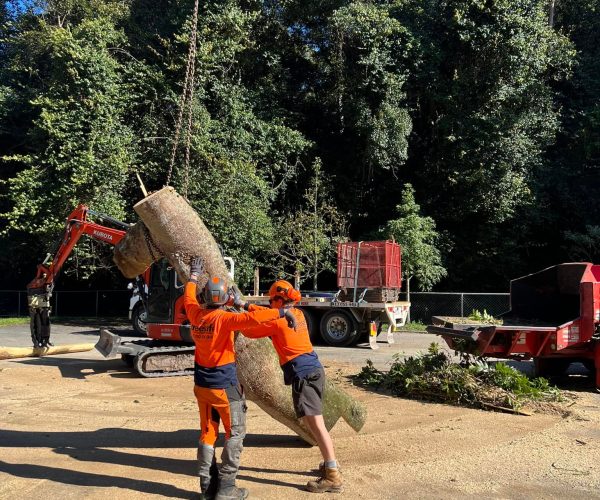
Depending on the site, this may involve large tree removal, controlled dismantling, crane-assisted work or broader land clearing. Treesafe’s commercial equipment and specialist machinery allow the approach to be matched to the size, access and conditions of the site.
Cleared vegetation also needs to be managed. Depending on project requirements, material may be chipped or mulched on site or removed to keep areas accessible for following trades.
Stump and Root Management Before Construction
Tree removal can leave stumps and major roots within areas required for excavation, services or other construction works. These need to be considered before the next stage begins.
Stump grinding can remove stumps below ground level where appropriate, while some construction areas may require more extensive stump or root removal. The required depth and extent should be determined by the proposed works and relevant construction requirements.
Coordinating this work before excavation can help prevent stumps becoming unexpected obstructions once other contractors are on site.
Learn more about stump grinding before construction.
Safety Considerations for Commercial Tree Work
Commercial tree work can involve large trees, heavy machinery, restricted access and work around buildings, services and other contractors.
Before work begins, the site and proposed tree works need to be assessed so appropriate equipment, exclusion areas and work methods can be established. On active construction sites, tree works may also need to be coordinated with site access and other contractors.
Experienced commercial arborists understand these constraints and can plan tree removal and clearing around the conditions and safety requirements of the individual site.

Protecting Retained Trees During Construction
Not every tree on a development site will necessarily be removed. Approved plans or project requirements may identify trees and vegetation that need to be retained and protected during construction.
Arborist advice can help establish appropriate protection measures around retained trees and identify activities that could affect trunks, canopies or root zones.
This becomes particularly important where excavation, machinery access, material storage or other construction activity is planned close to retained vegetation.
Coordinating Tree Work With the Construction Program
Tree removal, vegetation clearing and stump grinding often need to occur at specific stages of site preparation.
Planning these works alongside demolition, excavation and civil works can help ensure required areas are accessible when following contractors arrive. On staged developments, vegetation work may also need to be completed progressively rather than clearing the entire site at once.
Site access, ground conditions and weather can also affect when larger clearing works can be completed, so allowing for these factors during project planning can help avoid unnecessary disruption.
How Arborists Support Development Projects
For development and commercial sites, arborists can assist with:
- Tree assessment and reporting where required
- Identifying trees for removal or retention
- Large and complex tree removal
- Vegetation and land clearing
- Stump grinding and root management
- Protection considerations for retained trees
- Coordination of tree works with other site activities
Bringing these services together can make vegetation management easier to coordinate and help prepare the required areas for subsequent construction works.
Arborist Support for Development and Commercial Sites
Treesafe provides commercial arborist services across Brisbane Southside, the Gold Coast and surrounding areas of South East Queensland, supporting developers and property managers with tree assessment, removal, stump grinding and land clearing.
With qualified arborists and specialist equipment for larger and more complex tree works, Treesafe can coordinate vegetation work with the requirements and timing of your project.